The Lydia Brings Dining, Lofts and Marion History to Downtown
- Chip Gregory
- May 5
- 5 min read
MARION, Ohio — The Lydia Building has turned the corner of Church and Main into one of Downtown Marion’s clearest examples of what a walkable dining and entertainment district can look like: restaurants at street level, residents above them, Founders Park nearby and a restored historic building back in daily use.

The name reaches back to Marion’s founding story. The Lydia Building is named for Lydia Smith Baker, wife of Eber Baker, one of Marion’s founders, giving the Church and Main project a direct link to the city history reflected just steps away at Founders Park.
The building brings together three restaurant spaces and upper-floor apartments at one of downtown’s most visible corners.
In a Marion LIVE interview, Luke Henry said the finished building was planned for three restaurant spaces and nine apartments. The ground-floor lineup includes Whit’s Frozen Custard, Lazeez Grill and OX-B’s, creating a mix of dessert, Mediterranean food and casual wings-and-wraps dining at Church and Main.

They can live upstairs, walk downstairs for food, cross toward Founders Park, continue to a show, meet friends nearby or stop for custard after dinner. The Lydia Project adds another active corner to Downtown Marion’s dining, entertainment and walkable culture scene, connecting South Main Street’s growing food and entertainment district with residential life at Church and Main.
A Downtown Ecosystem Taking Shape





When I sat down with Henry for Marion LIVE, the word that kept coming up was “ecosystem.”
He was not talking about one building. He was talking about how a downtown starts working when businesses, locations, entrepreneurs, residents and gathering places support one another instead of standing alone.
“Our goal has always been to build an ecosystem,” Henry said. “One thing feeds another, connects to another, supports another.”

That idea is easy to see at The Lydia.
The building sits at the edge of Founders Park, near downtown bars, restaurants, shops and other entertainment stops. It is close enough to those places to matter. A person can come downtown for one reason and leave having done three things.

That is the basic machinery of a downtown district. It sounds simple. It rarely is.
Henry said the original effort behind Main Street Reimagined began with the purchase of eight buildings on one block of South Main Street in 2018. At the time, he said, the block was about 80% vacant. The vision was to make that stretch “the center of downtown dining, shopping and entertainment.”
The Lydia was one of those original buildings. It was also one of the hardest.
A Building Many Would Have Torn Down
“The Lydia is a building that most people would’ve torn down,” Henry said. “We probably would’ve been wise to, frankly, but it’s a historic building.”


For years, the building at Church and Main was familiar to residents for other reasons. It had housed local fixtures over time. The corner carried memory. But memory does not keep lights on, preserve brick or bring people through the door.
The upper floors had been vacant for decades.
Henry said parts of the building had been used as sleeping rooms nearly a century ago. By the time his team got inside, broken windows had let pigeons in. Plaster had fallen. Debris covered the floors. The project was large, expensive and slow to bring back.
Then there was the view.

Through the few windows that were not boarded up, Henry said he could see Founders Park, South Main Street and the courthouse.
That changed the argument for the building.
“I think that this is a place people would love to be living,” Henry said. “People would love to be part of this.”
The Restaurant Row at Church and Main


Whit’s Frozen Custard gives the building an easy family and after-dinner draw. It is the kind of stop that works after a meal, after a show, after a walk or after a kid has successfully negotiated dessert with the cold precision of a small-town attorney.
Lazeez Grill adds a different flavor to the block. The fast-casual Mediterranean restaurant brings bowls, pita wraps, fresh ingredients, savory meats and house-made sauces to downtown Marion. Its arrival broadens the local food mix and gives people another lunch or dinner option within walking distance of the surrounding downtown businesses.
OX-B’s rounds out the restaurant row with wings, wraps and casual food built for a quick meal, a group stop or a downtown night out.
Why Downtown Living Matters
The apartments are just as important.
Henry said the residential side of the downtown effort matters as much as the commercial side. People need places to live downtown, he said, and they need nearby amenities — coffee shops, craft beer, watering holes, restaurants and places to go.
He also made a sharper point about the kind of housing downtown can offer.
“At the same price as a vanilla box that you can go live out by the freeway, you can have a super cool place that has soul,” Henry said. “It’s got history.”






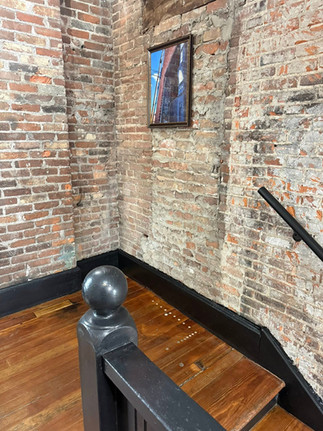




At The Lydia, that history is visible in the building’s bones. Exposed brick, older materials and views over the downtown district give the apartments a different character than newer apartment construction near a highway or shopping strip. The building’s upper floors place residents above the restaurant row and within walking distance of the surrounding downtown district.
That changes how the corner functions.
A restaurant can bring a lunch crowd. A theatre can bring an evening crowd. A park can bring families and walkers. But residents create ordinary use. They walk out in the morning. They pick up food. They meet people. They notice new storefronts. They bring friends over. They give downtown activity between the formal events and grand openings.
The Lydia Project adds that layer at Church and Main.
Church and Main Gets Its Role Back
Henry said anything meaningful is hard, and The Lydia had more than its share of setbacks. He called it the hardest project his team had taken on. The building was large. The upper floors were in rough condition. Historic preservation added requirements. Modern use required major interior work.
But the reason for doing it was visible from the beginning.

The corner had location. It had history. It had views. It had enough size to matter. And it sat in the exact place where downtown Marion’s dining, entertainment and residential pieces could begin to connect more clearly.
It turns Church and Main into a usable downtown anchor: restaurants below, residents above, public space nearby and enough surrounding activity to make the corner part of a larger downtown experience.
The Lydia gives Downtown Marion another place to eat, walk, meet, live and stay awhile.