Kin & Kilt Marion Ohio: A Scottish-Inspired Pub Redefining Downtown Entertainment
- Chip Gregory
- Apr 2
- 5 min read
Updated: Apr 3

There are business owners who open a place to make money. And then there are those who open a place because they care about where they live.
When I sat down with Dave and Lynn Roush, the owners of Kin & Kilt in downtown Marion, that distinction was immediately clear.
Before getting into the story of the building, the bar, or the business itself, one thing stood out: they care deeply about this city—not in a surface-level, marketing-friendly way, but in the way that shows up in risk, time, money, and long-term commitment.
They didn’t build Kin & Kilt just to open a bar. They built it because they believed downtown Marion deserved something more—and they were willing to be part of making that happen.
What they’ve created is more of a hybrid hospitality concept—an experience-first venue that blends a Scottish-inspired pub, axe throwing, live entertainment, and private events into one destination in the heart of downtown at 130 S. Prospect Street.

From Eyesore to Anchor
Their story begins the way many local stories do—with frustration. Watching businesses leave. Watching options disappear. Watching a downtown lose energy.
Dave put it simply:
“We were in a place where we could do our part to help revitalize Marion.”
That decision led them to a building most people would have avoided—a former bowling alley in severe disrepair.
Lynn remembers the first time they saw it:
“It was the ugliest building in town… (she laughs) I stood there and wanted to cry.”
Inside wasn’t any better.
“Then I walked inside… and it was even worse. But we both knew this was the place, this was the mission. Dave saw the potential first, then I did after.”
The building had been neglected for years—leaks, damage, abandoned equipment. A gutted shell of what it used to be.
What they bought wasn’t a renovation project. It was a full rebuild.

Vision Meets Execution
What makes Kin & Kilt work isn’t just the concept—it’s how Dave and Lynn work together.
Dave brings the big-picture vision—how everything fits, how it functions, and where it’s going.
Lynn brings the detailed, micro-level vision—how everything looks, feels, and is experienced once you step inside.
That combination is what makes them effective business partners.
The turning point came from something unexpected.
What makes that moment so telling is how small it seemed at first. Early on, the plan was to keep things practical and streamlined: axe throwing lanes, a modest bar, maybe canned beer, and just enough work to open part of the building. Then Lynn found a leaded-glass front door on Facebook Marketplace from Columbus. To her, it looked like a traditional tavern door—the kind of detail that instantly shifted the direction of the project.
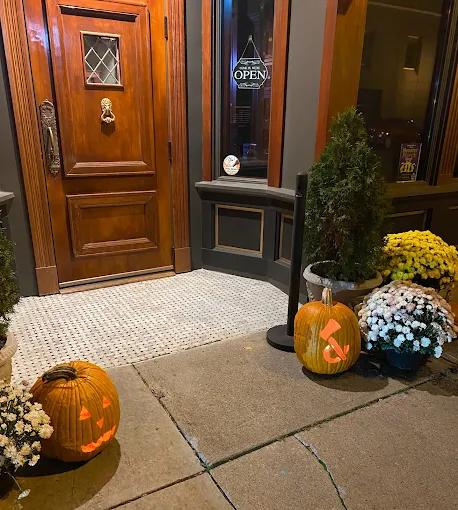
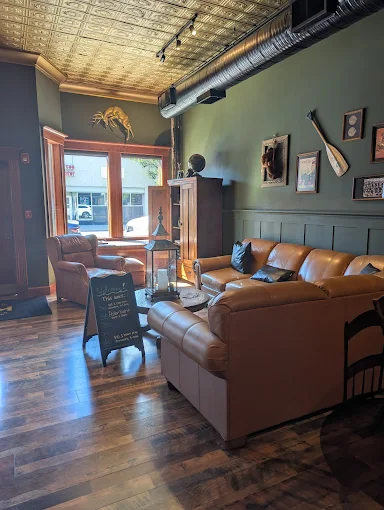


Once that door entered the picture, the space stopped being a phased, efficiency-driven concept and started becoming Kin & Kilt. The color of the door inspired the color of the bar, and from there, the visual identity began to build outward.
As Lynn put it:
“It started with the door,”and at that point,“there was no quick way of doing it.”
They had a vision of something more—a destination built around experience: a Scottish-inspired pub, axe throwing, live entertainment, special events, and a place where people don’t just stop in—they stay.
From there, everything aligned.
Repurposed historical doors. Curated wall art. Black-and-white photography. Custom metalwork. Layered textures. A cohesive artistic identity across multiple rooms.
“It’s a perfect marriage… We both come up with ideas… Dave handles the major construction—the rebuilds, systems, and structure—and I create the interior vision, the design, and how the space feels the moment you walk in.”
That partnership is what gives Kin & Kilt its consistency. It doesn’t feel assembled. It feels built.
Inspired by Scotland, Translated to Marion
Travel shaped the concept in a way no business plan could.
Dave, who has Scottish roots, and Lynn spent time in Scotland experiencing its pubs—not as tourists, but as welcomed guests.
“We loved how welcoming it was… that’s what we wanted to bring here.”
What stayed with them wasn’t just the look—it was the feeling.
In Scotland, pubs are gathering places. You’re not rushed. You’re not processed. You’re welcomed. Conversations happen easily. People stay longer.
That became the blueprint.
Kin & Kilt isn’t a themed bar. It’s a translation of that experience into Marion—a place designed for connection, comfort, and shared experience.

Dave and Lynn’s vision is what gives Kin & Kilt its identity.
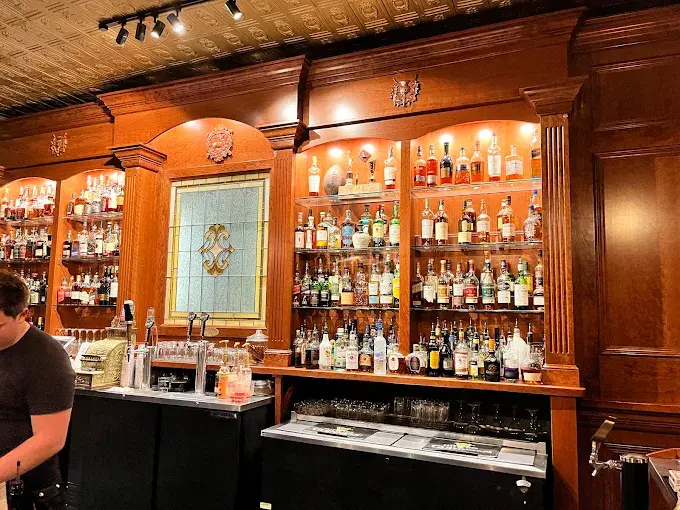
Repurposed architectural elements. Salvaged materials. Historic doors with ornate hardware. Patterned tin ceilings. Warm wood flooring. Layered textures. A custom-built bar and curated décor that reinforce the Scottish-inspired theme throughout the space.
“We wanted it to feel like home… somewhere I would want to come and sit.”
“I didn’t want it to feel high class where people couldn’t enjoy it.”
That balance—comfortable but elevated—is what makes the space work.
It invites people in—and gives them a reason to stay.
From the carved door hardware to the backlit whisky wall, the details aren’t decorative—they’re deliberate.
More Than a Bar — An Experience Venue
Kin & Kilt operates as something more layered than a traditional bar. It falls into what’s often called “competitive socializing”—a blend of hospitality and activity.
At its core, it includes:
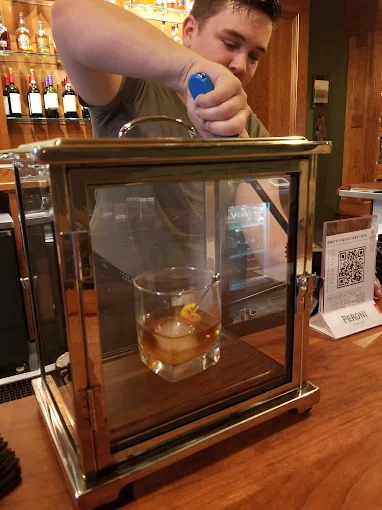
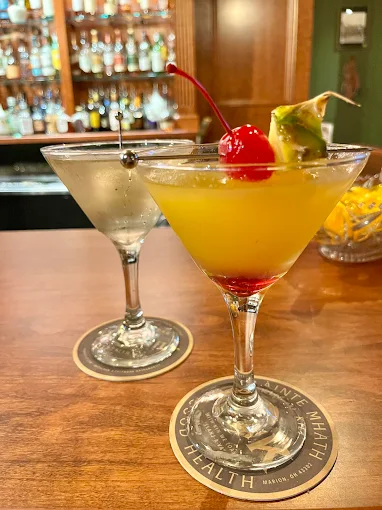
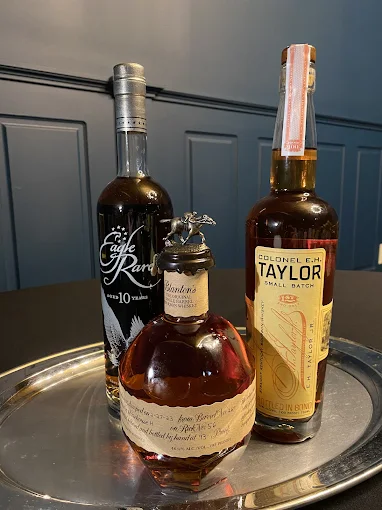
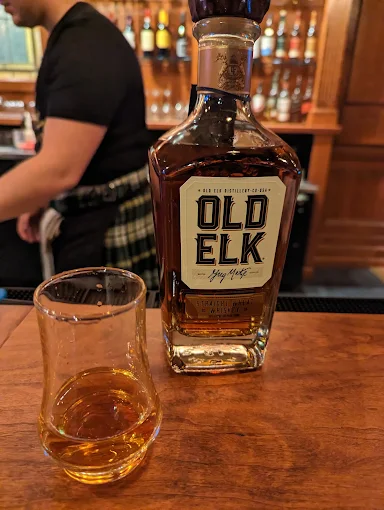
• A full-service bar anchored by a robust, whisky-forward program, set within a custom-built wood bar that immediately establishes the tone of the space. Backlit shelving displays an extensive selection of Scotch and bourbon, alongside signature cocktails, classic mixed drinks, Ohio craft beer, domestic and imported beers, and a curated wine offering. The bar leans into its Scottish identity without limiting choice, offering depth for enthusiasts while remaining accessible for casual guests. It’s not just a place to order a drink—it’s a place to sit, stay, and engage. Though they don’t operate a full-service kitchen, they serve pub-style pizza and specialty hot dogs known as “Scottie Dogs.”
“We wanted to provide something more than just a bag of chips.”
The menu is simple, efficient, and designed to support the experience—not compete with it.
The model also allows flexibility—bringing in food trucks, partner vendors, and even accommodating outside food in certain cases.
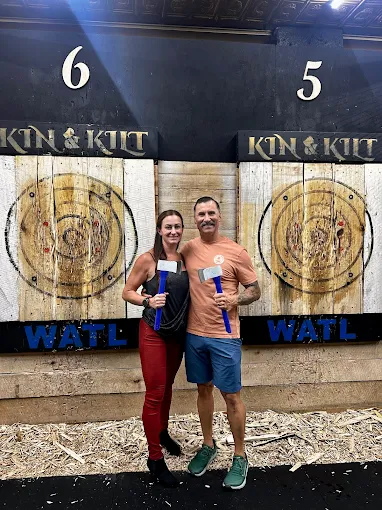
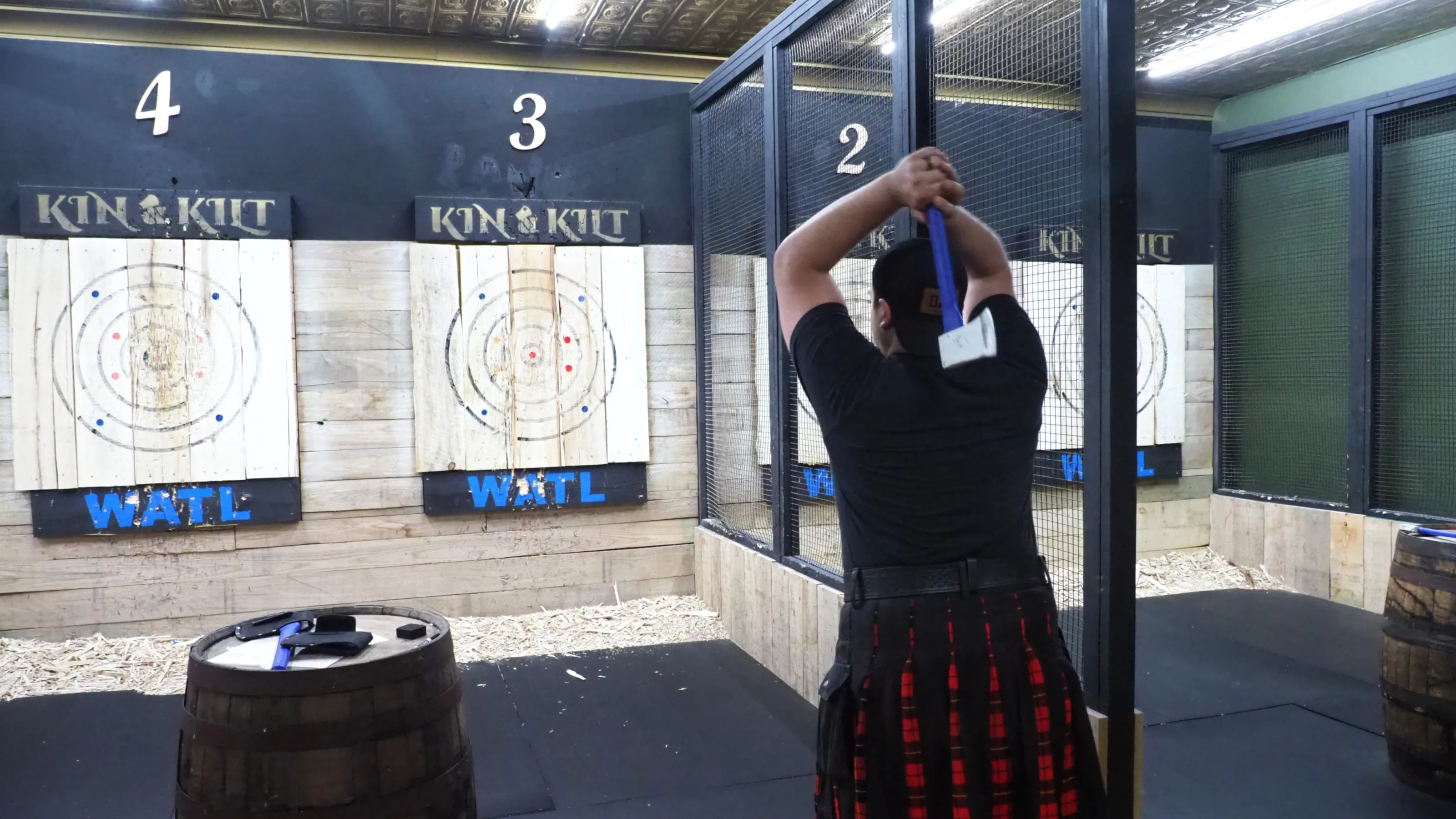
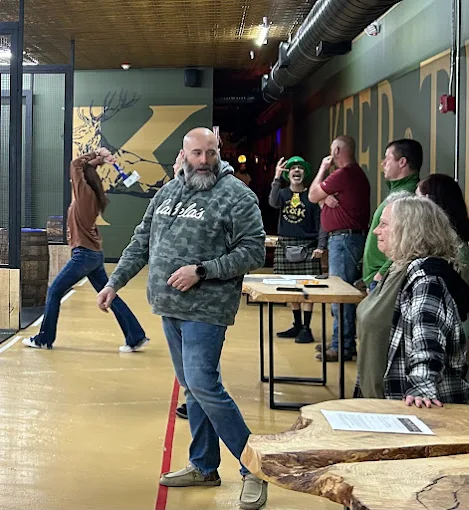

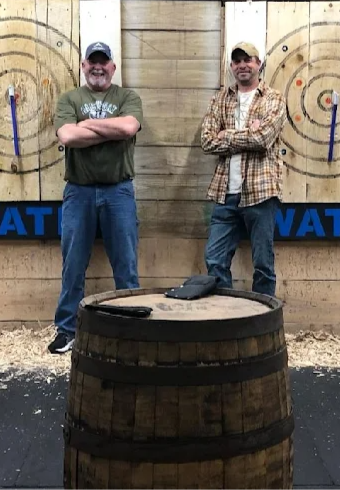
• Axe throwing as a central interactive experience, built around 10 enclosed lanes that create both structure and energy within the space. Designed for casual participants and group bookings alike, it transforms a typical night out into something active and shared. The setup—wood targets, individual lanes, and safety-partitioned throwing areas—creates a focused but social environment where groups can play, compete, and stay engaged. It’s not a novelty feature—it’s a core driver of interaction, reinforced by themed nights, group participation, and the visual identity of the space itself.

• Live entertainment and structured social programming, including local, regional, and national acts, live music, trivia, karaoke, open mic nights, poker, and themed events. This isn’t occasional entertainment—it’s a deliberate strategy. Programming drives repeat visits, builds energy in the space, and positions Kin & Kilt as an active destination rather than a passive venue.
What sets Kin & Kilt apart is not just that they host events—but the level at which they approach them. They bring in local, regional, and national acts, creating experiences that go beyond the typical rotation of familiar names.
“Where else can you go in town and hear authentic Celtic music?”
They’ve invested in talent, paid for quality, and taken risks on programming that elevates the space—even when turnout didn’t initially match the effort.

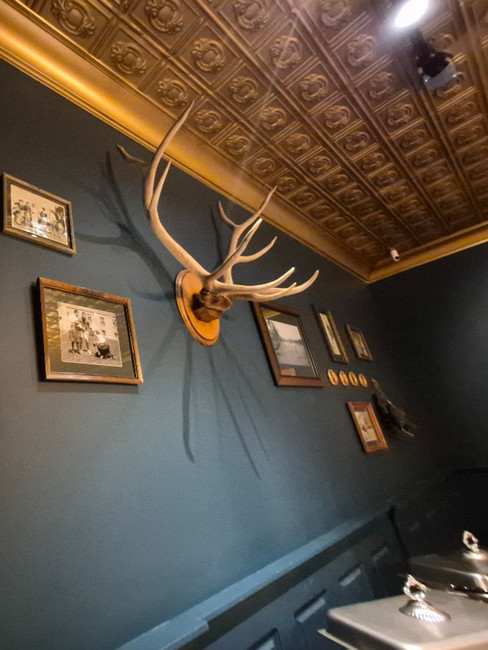
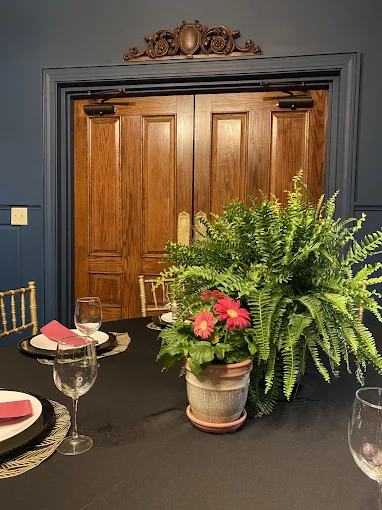

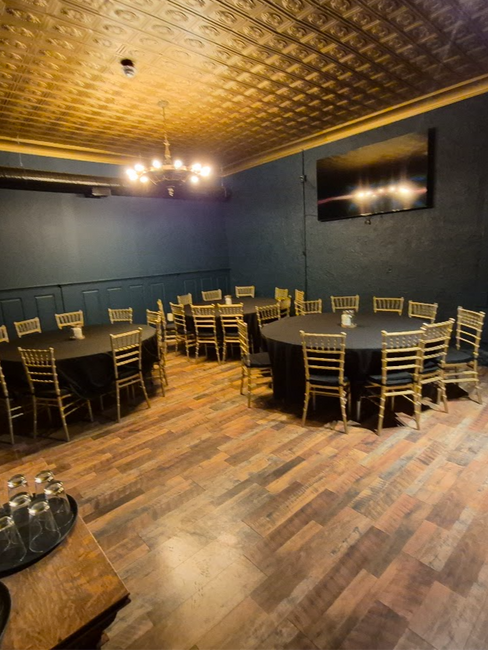
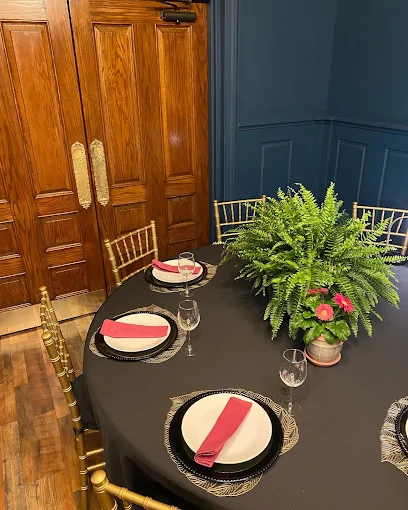
• A private event space accommodating roughly 40 guests, designed with the same level of intentional detail found throughout the venue. The room features deep blue walls, historic architectural elements, a patterned tin ceiling, warm wood flooring, and curated décor including framed vintage imagery and mounted stag accents that reinforce the Scottish-inspired theme. Round tables provide flexible seating for gatherings ranging from birthdays to corporate events. The result is a space that feels both elevated and comfortable—more like a private club room than a rented hall—while still connected to the energy of the larger venue.


This isn’t a one-purpose space.
It’s a social hub—built around shared experience, where atmosphere, activity, and programming work together to create something people return to.


Comments